Robert Gore, UCLA Library’s visual arts librarian and steward of its renowned artists’ book collection, died June 12 at age 67. His innovative approach to library instruction using these original works inspired thousands of students.
Gore joined UCLA Library in 2005 and spent more than two decades connecting students, faculty and researchers with the visual arts through instruction, research support and collection development. Working closely with UCLA’s art, art history and design media arts departments, he became known for his expertise with artists’ books, original works that blur the boundaries between books, literature and art, and for finding creative ways to bring those materials directly into teaching and research across disciplines.
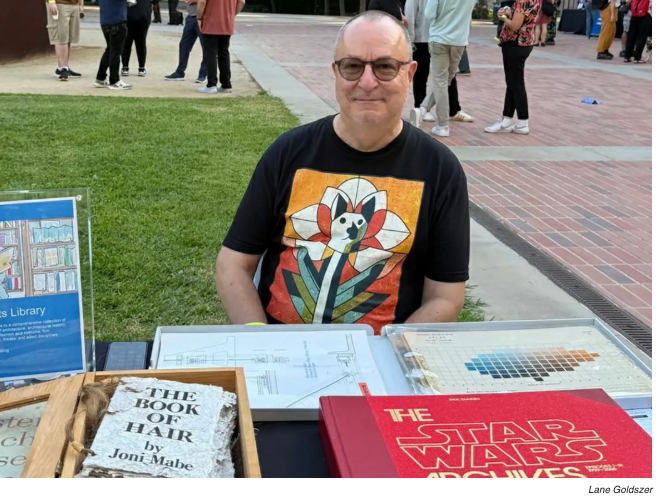
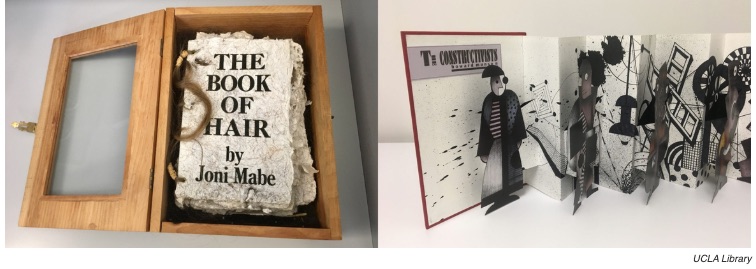
Due in significant part to Gore’s acquisitions during his long tenure, UCLA Library has become one of the largest holders of artists’ books in North America.
“Robert was an incredibly special person and so treasured at UCLA, especially by all my colleagues in the department of art history,” said George Baker, a professor of art history who holds UCLA’s Walter Hopps Chair in Modern and Contemporary Art. “He was an essential part of our work as art historians, a full collaborator and often co-explorer of the knowledge we seek to unearth.”
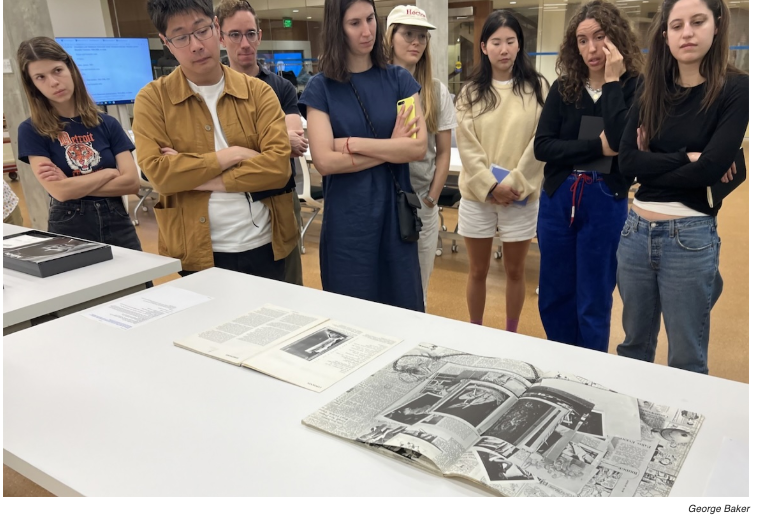
Baker became close with Gore nearly 20 years ago through their shared interests in photography and artists’ books. Baker recalled discovering that the Arts Library held a then-forgetten copy of the 1969 artists’ book “A document made by Paul Thek and Edwin Klein” while researching Thek. Gore explored the work with him and introduced him to other materials in the collection. Nearly two decades later, Gore helped bring the same book into a 2025 session of Baker’s graduate seminar in contemporary art alongside materials from the Susan Sontag papers in UCLA Library Special Collections.
A collaborator and co-explorer
In the classroom, Gore emphasized hands-on discovery and direct engagement with the collections.
“As a colleague, Robert was the consummate professional, always interested in sharing his expertise generously and engaging students in hands-on experience,” said Johanna Drucker, the Martin and Bernard Breslauer Professor Emerita of Bibliographical Studies in the UCLA Department of Information Studies. “I lost count of the number of times he packed up a cart of materials and brought them to a classroom for me so students could pass books around and talk about them directly.”
UCLA Library colleagues similarly remembered Gore. Diana King, who worked alongside him at the Arts Library for 19 years, recalled his extraordinary breadth of subject and format expertise, but said he was “the opposite of a gatekeeper” and delighted in students’ exploration of artists’ books, photography and poetry. Lane Goldszer, who first worked with Gore at the Arts Library in 2015 as a student worker and later returned as a librarian, credited Gore with helping them find a path toward arts librarianship. “I will probably most miss his great kindness and genuine love and curiosity for the world,” Goldszer said.
Born in 1958 in Sussex, New Brunswick, Gore earned a bachelor’s degree in English and Canadian literature from the University of British Columbia, followed by a bachelor of fine arts degree in photography from what was then the Emily Carr College of Art and Design in Vancouver. He earned a master’s degree in library science from the University of British Columbia in 1989.
Before coming to UCLA, Gore spent 14 years at Kwantlen College, now Kwantlen Polytechnic University, in British Columbia, working in reference, instruction, acquisitions and collection development.
The joy of turning pages
During his two decades at UCLA, Gore developed and activated the library’s artists’ book collection through acquisitions, classroom instruction, workshops and collaborations across campus. His Fiat Lux seminar on artists’ books attracted students from disciplines ranging from art and English to nursing and biology. He described his favorite moment in the class as the silence when students became absorbed in the materials: “All I can hear is the turning of pages.”
For Gore, building the collection was inseparable from teaching. “Building the collection is a joyous activity for me,” he said in 2024. “The first question I ask myself when looking at an individual work for acquisition is: Will this be of interest or inspirational to students?”
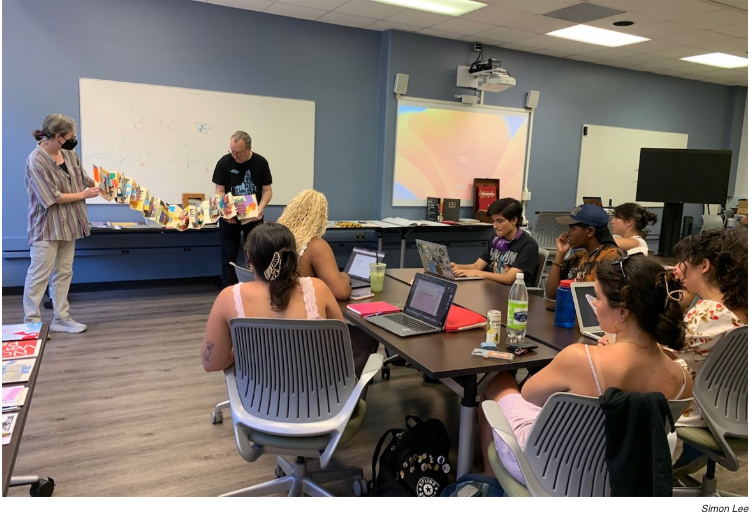
He believed artists’ books, with their unconventional forms and structures, could challenge students’ ideas about what a book could be and deepen their engagement with the library and its collections.
Gore’s influence extended beyond UCLA. He helped establish a University of California systemwide artists’ book working group, shared his expertise with fellow librarians and early-career conservators, and worked with students in programs including the Mellon Mays Undergraduate Fellowship. He was also active in the Art Libraries Society of North America.
In 2024, the Librarians Association of the University of California–Los Angeles named Gore UCLA’s Librarian of the Year, recognizing excellence in librarianship in areas including creativity, innovation, leadership and inclusivity.
Gore also ensured that his commitment to artists’ books would continue for future generations. In 2022, he established the Robert Gore and Mitchell Levin Endowment for Artists’ Books in the Arts Library at UCLA to support the acquisition, management and preservation of the collection. The endowment honors Gore’s late partner, Mitchell Levin, who shared his passion for artists’ books.
The librarian as artist
Gore was also an accomplished poet and photographer. As a young writer, in 1980, he co-founded the Vancouver literary magazine Vancouver Streets. His poetry later appeared in literary journals including Canadian Literature, Prism International and Contemporary Verse 2, and his chapbook “The Code Between Us” was published by Frog Hollow Press in 2002. He also exhibited his photography and other work at galleries in Canada and the United States. At the time of his death, Gore was completing a poetry manuscript titled “Forth and Back.”
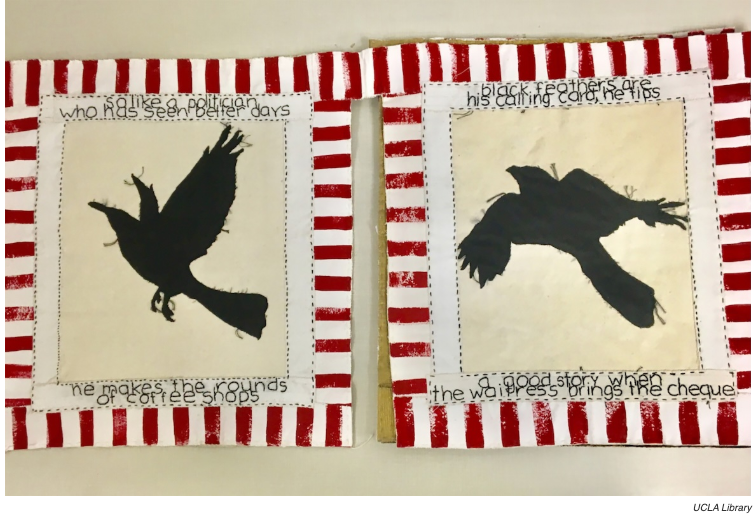
Drucker said Gore’s own work as a poet gave him a distinctive sensitivity to language and ideas that informed his approach to books. She remembered him as a selective and eclectic curator, guided by his expertise but always open to being surprised by an unexpected work.
“Robert lived the ethics and codes of behavior he believed in, modeling for students and colleagues alike a commitment to professional work in the service of the larger cause of preserving and sharing knowledge and culture,” she said.
Gore was predeceased by Levin, his sister Jacqueline and his parents. He is survived by his sister Katherine Gore of British Columbia; nephews JP Holecka and his wife, Denise, and Stefan Holecka; great-nephew Noah; great-niece Sonia; and a wide circle of friends in Los Angeles and Canada.
UCLA Library will host a Celebration of Life for Gore on Wednesday, Sept. 16, from 3 to 4:30 p.m. in the Powell Library Rotunda. The program will begin at 3:15 p.m. Guests are asked to RSVP by Sept. 4, 2026.
In conjunction with the memorial and in honor of Gore’s life and legacy, displays of artists’ books will be on view in the Arts Library, Louise M. Darling Biomedical Library and Powell Library through winter quarter 2027.
Donations may be made in Gore’s memory to the Robert Gore and Mitchell Levin Endowment for Artists’ Books in the Arts Library.
This article was originally posted on UCLA Newsroom online here
