
Trained as an architect and architectural historian, Stella Nair has conducted field-based research in Bolivia, Mexico, Peru, and the United States, with ongoing work in the South-Central Andes. Her trans-disciplinary scholarship is grounded in a cultural landscape approach to the built environment, with a current focus on ephemerality, aural architecture, gender, and sustainable engineering.
Publications:
Nair’s publications and ongoing research examine the intersections of construction technologies, building processes, and structural and hydraulic engineering with ephemeral architecture, landscape transformation, gendered spaces, and acoustic design. Her work advances interdisciplinary approaches to the study of the built environment through the integration of material analysis, archival research, experimental investigation, and computational modeling with sustained collaborations with descendant communities and knowledge keepers.
Her first major monograph, The Stones of Tiahuanaco: A Study of Architecture and Construction (Cotsen Institute of Archaeology Press, 2013) is co-authored with Jean Pierre Protzen and is a foundational study of Tiahuanaco stone-working practices. Rather than treating monumental architecture as symbolic form alone, the book explores the intellectual and technical processes of construction, revealing Indigenous building practices as highly sophisticated systems of facture, material science, and engineering knowledge.
Her second monograph, At Home with the Sapa Inca: Architecture, Space, and Legacy at Chinchero (University of Texas Press, 2015), foregrounds Indigenous language and knowledge in order to study an Inca royal estate. In doing so, Nair challenges scholarly paradigms of Inca building types and values, and provides new insights into how the Inca organized space, movement, and landscape to convey meaning and produce imperial authority. The book reframes Inca architecture as an active familial and political technology— one that structures perception, ritual, and social relations—rather than a passive backdrop to empire.
Nair’s third book, The Forgotten Canopy: Rethinking Ephemeral Architecture, Ecology, and Imperialism (University of Toronto Press, forthcoming), is co-edited with Paul Niell and advances a major reorientation in architectural history by centering buildings that have been systematically overlooked because of their organic and impermanent materials. Based on a series of conferences and workshops, this volume brings together builders, knowledge keepers, and scholars to discuss Indigenous, African, and African descendent architectural practices in the Americas and Atlantic world. In doing so, the volume reframes the built environment as deeply ecological, contingent, and materially plural, challenging long standing assumptions about permanence as the defining conditions of architectural significance.
Her fourth book, Building the Inca World (in progress) extends this trajectory by reconceptualizing the Inca built environment as a gendered, multi-sensory, and socially embedded practice. Nair demonstrates the central role women played in Inca architecture, from how it was construed and constructed, to how it was experienced and transformed. By foregrounding the social, sensory, technical, and gendered practices through which the Inca built environment was produced and experienced, Nair reveals the limits of the colonial categories through which Inca architecture has been understood and develops new approaches to its history. Her book offers a feminist, Indigenous-centered historiography with broad implications for architectural and art history, archaeology, and Indigenous studies, while challenging the assumptions and methods through which the broader field of architectural history constructs its objects of study. For this work, Nair has received the “Research Excellence Award” from the UCLA Center for the Study of Women.
Fellowships and Honors
Nair is currently a Senior Fellow of Pre-Columbian Studies at Dumbarton Oaks (Harvard University) and recently was a core participant in the interdisciplinary project “Sound, Space, and the Aesthetic of the Sublime”. Her research has been supported by major fellowships and grants from institutions such as the American Academy of Rome, the American Philosophical Association, the Center for the Study of the Visual Arts (National Gallery of Art), Dumbarton Oaks, the Fulbright Institute, the Getty Foundation, the Guggenheim Foundation, the John Carter Brown Library, the National Humanities Center, and the Terra Foundation for American Art. Among her recognized contributions is the article “Localizing Sacredness, Difference, and Yachacuscamcani in a Colonial Andean Painting” selected as one of Art Bulletin‘s “greatest hits” representing the journal’s most significant scholarship over the past century.
Laboratories and Working Groups
Nair directs the Andean Laboratory and the Architecture laboratory at the Cotsen Institute of Archaeology, supporting postdoctoral, graduate, and undergraduate research on Andean and architectural topics at UCLA. These laboratories emphasize experimental and collaborative approaches to Andean studies and the global built environment, integrating field documentation, material analysis, digital reconstruction and acoustic based inquiry to individual research projects.
Nair also co-founded and advises several interdisciplinary working groups on campus that sponsor lectures and events, including the Andean Working Group, which convenes regional and international scholars for public lectures and discussions on Andean studies; the Architecture Working Group, which brings together scholars of the global built environment and the interested public; and with Kevin Terraciano, the Indigenous Material and Visual Culture Reading Group, which fosters cross-disciplinary dialogue on Indigenous material practices across the early modern America.
Appointments
Stella Nair is an Associate Professor in the Department of Art History. She is also Core Faculty in the Archaeology Interdepartmental Program and the Center for 17th and 18th Century Studies at UCLA. Nair serves on the Governance Board for the Center for Global Antiquity. and the Faculty Advisory Committees for the American Indian Studies Center and the Latin American Institute.
Professor Nair is currently not accepting new graduate students.
Education
Ph.D. Architecture, University of California, Berkeley
M.Arch. Architecture (Professional Degree) University of California, Berkeley
B.A. History (with honors) Cornell University
Books
-

- Las piedras de Tiahuanaco
- Arquitectura y construcción de un centro megalítico andino
- Fondo Editorial de la Pontificia Universidad Católica del Perú, 2016
-
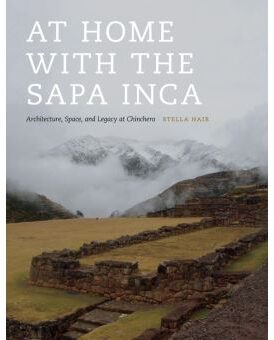
- At Home with the Sapa Inca: Architecture, Space, and Legacy at Chinchero
- University of Texas Press, 2015
-
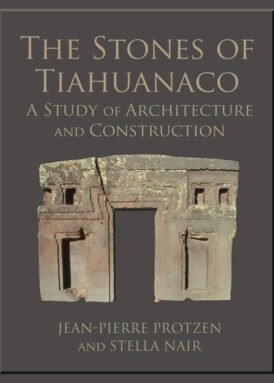
- The Stones of Tiahuanaco: A Study of Architecture and Construction
- Cotsen Institute of Archaeology Press, 2013
Articles
SELECTED PUBLICATIONS
- “Drawing the House for the Chosen Women: Guaman Poma de Ayala and Indigenous Perspectives on Gender in the Inca Built Environment.” ABE Journal: Architecture Beyond Europe, no 26 (2026):135-46.
- “La tierra sagrada y la arquitectura inka,” in Los Incas, más allá de un imperio. Edited by Julio Rucabado and Cecilia Pardo. Lima: Museo de Arte de Lima (MALI) 2023 101-111.
- “Inca Architecture in Two Empires: History, Identity, and the Challenges for Historic Preservation in the Andean Built Environment.” In in-discipline: dialoghi sul patrimonio culturale, (2023): 169-188. Edited by Michele Beccu, Elisabetta Pallottino, Paola Poretta, and Francesca Romana Stabile. Rome, Italy: Universitá Roma Tre Press, Rome.
- “La plaza inca: arquitectura, paisaje, y teatro en Chinchero,” in Actas del I Congreso Internacional de Arquitectura Andina: arquitectos y arqueología, en homenaje a Emilio Harth-Terré, (2022): 159-172. Edited by Miguel Guzmán. Lima, Perú: Editorial Universitaria Universidad Ricardo Palma.
- ’Salones de vino’, conventos y otros espacios incas imaginados,” in Arte antes de la historia: para una historia del arte antiguo andino, (2020): 311-330. Edited by Marco Curratola, Cecile Murchard, Joanne Pillsbury, and Lisa Trever, Lima, Peru: Pontificia Universidad Católica del Perú.
Courses
SELECTED COURSES TAUGHT, GRADUATE
- Architectural Theory and Methods: Key Thinkers and Theories
- Architecture, Space, and Landscape in Colonial Encounters
- Art, Power, and the Sacred Capital: Tenochtitlan and Cuzco
- Body, Gender, Place
- Ephemerality and Architecture
- From Law of the Indies to Brasilia: Architecture and Urbanism in Latin America (Mexico, Peru, Brazil)
- Gender and the Ruins of Architecture
- Materiality and Architecture
- Public Places, Private Spaces: Constructing Inca Royal Landscapes
- Sound and Space
- The Inca in the Early Modern World
- Wastelands and Waterways
SELECTED COURSES TAUGHT, UNDERGRADUATE
- Abstraction and Inca Art
- Architecture and Feminism
- Art, Architecture, and Urbanism of the Americas until 1450 A.D.
- Art, Architecture, and Urbanism of Latin America, 1450 A.D.–present
- Art Historical Theories and Methodologies
- Arts of the Andes
- Cuzco: A Journey into the Urban Unknown
- Inca Visual Culture
- Indigenous Arts of the Colonial Andes
- Making Sacred Landscapes: Pilgrimage in the Medieval World
- Palaces of the New World
- Reclaiming Sacred Landscapes: Indigenous Sovereignty and Placemaking Against the American Empire
- Soundscapes of the Early Modern Atlantic
- Women in Maya and Mexica Art
Selected Links
- Smithsonian Magazine Article
- Buell Center, Columbia University “Land from Water”
- Charles K. Williams II Rome Prize: Fellow Profile
- UCLA CSW Research Excellence Award Announcement
- UCLA Faculty Newsroom: Guggenheim Fellowship Announcement
- Early Global Studies Podcast
- Microhistories Conference Paper on the Toilets of Machu Picchu
- Story about student collaboration in Cotsen Andean and Architecture Labs
